
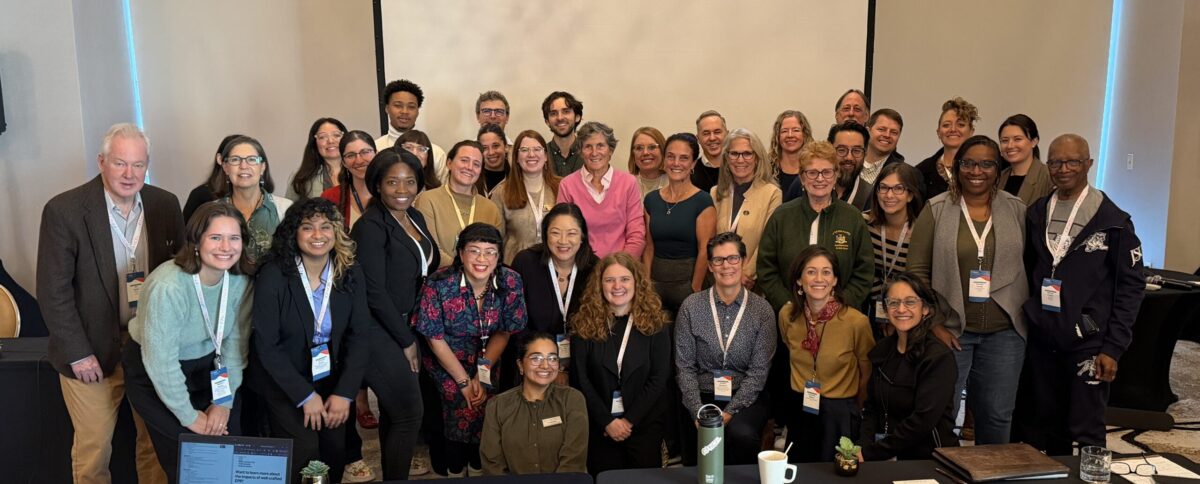
Last month, state legislators from around the country came together in Chicago to strategize state-level solutions to the growing plastic pollution crisis. The summit was organized by the National Caucus of Environmental Legislators, a nonpartisan network of state lawmakers, and supported by the Alliance for the Great Lakes.
Plastic pollution is a growing problem in the Great Lakes region – the lakes hold 20% of the world’s surface fresh water, and plastic pollution is found throughout them. Data from our Adopt-a-Beach cleanups finds that 86% of the litter collected along shorelines is either fully or partially made of plastic. Plastic never fully goes away. Instead, it breaks up into toxic microplastics that infiltrate our waterways. Researchers have found microplastics in the food we eat, the water we drink, the air we breathe, and in our bodies.
The summit provided state legislators with the latest knowledge and data on the health and community impacts of plastics. Discussions covered state-level policy, source reduction, increasing innovative reuse solutions, and impactful legislative and regulatory solutions, including those supported by the Alliance such as extended producer responsibility — holding producers accountable for the waste they create. The summit participants also discussed how to effectively counter false narratives surrounding plastic production and the end of life of plastics.
The good news is we are seeing the Great Lakes state legislatures leading the way and taking action. In 2024, Minnesota passed a comprehensive extended producer responsibility law for packaging to reduce the worst of the worst single-use plastics.
In Illinois, proposed legislation aims to shrink foam foodware and plastic bag use, while supporting innovative manufacturing that promotes reuse.
Lawmakers in Michigan introduced legislation this year that will monitor drinking water for microplastics and provide scientific tools and strategies to keep our drinking water safe. The bills follow recent recommendations from the International Joint Commission, an independent binational organization established by the U.S. and Canada to help manage the Great Lakes.
At a gathering during the conference, Joel Brammeier, President and CEO of the Alliance, spoke about the importance of taking swift action on plastic pollution. Investments in sustainable solutions can reduce plastic pollution at its source, while supporting innovative partnerships between our region’s universities, start-ups, and manufacturers to create new markets for their products. Civic leaders and legislators across the Great Lakes region can be the catalyst to keep this critical momentum moving forward. As we move into the new year, keep an eye on the impact our Great Lakes states will have on reducing plastic pollution and advancing innovative solutions.