The State Revolving Fund (SRF) Advocates Forum (Forum) brings together over 200 community leaders from across the country – including many in Great Lakes states – advocating for critical water infrastructure funding needs to replace lead service lines, upgrade storm sewer systems that flood during storms, and address emerging contaminants like PFAS. The forum is organized by the Alliance for the Great Lakes, River Network, and the Environmental Policy Innovation Center (EPIC).
Each year, the Forum asks the membership about their advocacy strategies, successes, and lessons learned, comparing feedback from surveys and one-on-one interviews. These valuable insights are summarized in our newly released second annual SRF Advocates Engagement Report (the first, 2021-2024 report is available here), including examples from Great Lakes Forum members’ advocacy engaged state policymakers to direct more SRF funding to communities with the highest need.
SRFs are a significant funding source for local governments and utilities to finance critical water infrastructure projects. SRFs combine state and federal funds to provide low-interest loans for projects that otherwise might not happen – including principal forgiveness or zero-interest loans for communities most in need. Each state administers its own program, so no two states’ priorities and rules for accessing financing and funding are identical. The SRF Forum helps leaders navigate the patchwork of state SRF rules and advocate for ways to make them easier to find, easier to understand, and ultimately provide clean and safe drinking water and necessary wastewater and stormwater services for residents.
These reports are written first and foremost for other water advocates, with peer-based insights and real-world examples they can use to support their own accountability and policy reform efforts to improve state SRF programs. The report also uplifts the important work of advocates serving your communities to improve access to clean, safe, and affordable water services. For more background on the SRFs and the topics discussed in the report, check out our “Reading List” deep dive, SRF Glossary of terms, topical factsheets, and Resource Bank.
Working Together Works – Coalitions are Essential
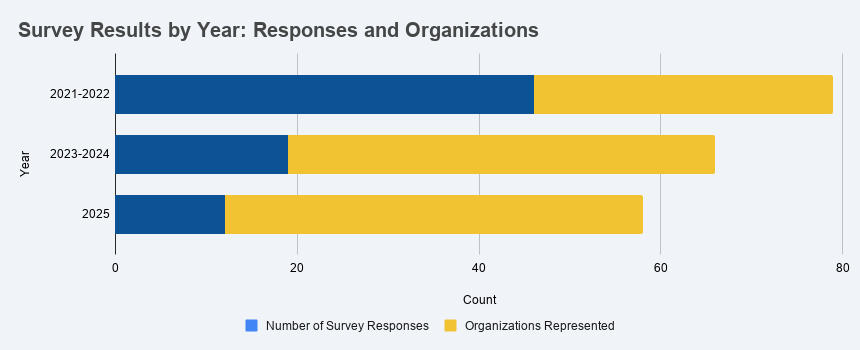
In the latest report, coalition-based advocacy remains a central strategy for successful SRF advocacy. In 2025, 80% of survey respondents said partnering with organizations was an effective strategy for advocacy, and 75% of in-depth interview participants described coalitions as essential for sustaining advocacy efforts. Over three survey periods, the number of organizations represented by our survey has increased (shown in yellow below). In fact, our 2025 survey represented a large number of organizations working together in coalitions, even with fewer surveys submitted, over a shorter period of time.
This strategy is working in the Great Lakes region. Coalition building helped Milwaukee Water Commons (MWC) in Milwaukee, Wisconsin, strengthen its advocacy and amplify the urgency of policy changes statewide, rooted in community needs. According to MWC, being in coalition with other organizations across the state strengthened direct engagement with utilities and the Wisconsin Department of Natural Resources. The strategy contributed to wins such as improving the state’s definition of disadvantaged communities (DACs) and increasing the amount of principal forgiveness utilities and municipalities could get for lead service line replacement projects in areas with a high burden of lines to replace.
We Should Know Where the Money Goes
Transparency is critical to understanding if state SRF policies and funding decisions are leaving some communities behind. Advocates – including in Michigan – asked state administrators to share data in publicly accessible dashboards showing award decisions, which projects were passed over during a funding year, and the share of investments reaching state-defined disadvantaged communities. We the People of Detroit, an advocacy organization based in Detroit, Michigan, noted that the absence of post-award reporting makes it difficult to determine whether investments are reaching the communities that need them most. Sharing data would strengthen public trust in program decisions, which is why advocates emphasized transparency to state administrators, at meetings, and in public comments.
Sustaining the SRFs is a Long-Term Mission
In addition to ensuring the U.S. Congress appropriates federal funds for the SRFs each year, advocates recognize that sustaining the health of the largest federal water infrastructure funding program requires long-term, dedicated advocacy. Many advocates emphasized the need to safeguard and strengthen these programs. Others also recognize the need for states to invest in water infrastructure – pairing their SRF advocacy with state legislative outreach to ensure funding stability.
Why Supporting the Forum and Advocates Matters
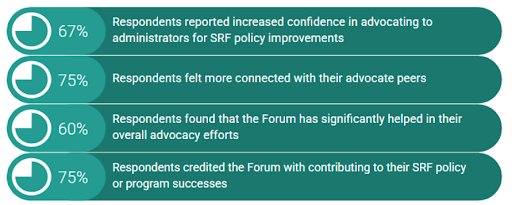
The Forum provides a unique space for advocates to share stories, build relationships, and foster coalitions supporting more equitable water investments in communities like yours. Survey respondents made clear why the Forum’s community of practice is important to building and sustaining advocacy:
If you are interested in engaging with state SRF administrators on your state’s policies, we have resources for you! If you are an advocate interested in SRF policy reform, please join our community of practice. Become a member today.
To learn more about the SRF Advocates Forum, visit the website.