
Water-intensive data center development is rapidly growing across the Great Lakes region. To help make sense of the impacts, we released this guide for residents, concerned citizens, grassroots organizations, and local leaders seeking clear, accessible information. It describes how water is used in data centers and provides checklists to help communities understand potential impacts and ask the right questions at the right time.
This playbook does not take a position on whether any specific proposed data center is “good” or “bad” for a community. The goal is to ensure that, if data centers move forward, they operate in ways that maximize public benefits while minimizing harm to water resources, community well-being, and ecosystems.
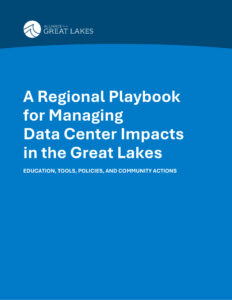
Download the playbook
Download checklists from the playbook
- Community Checklist for Evaluating Data Center Impacts
- Community Checklist of Community and Environmental Benefits
- Questions To Ask at Public Meetings
Data center impacts
Increased water and energy use from data centers could lead to strain on local water systems and increased prices for ratepayers, and ultimately, water shortages, groundwater conflicts, and aquifer contamination. Data centers can discharge wastewater that’s contaminated with pollutants, potentially damaging our lakes and rivers. Residents may already be seeing their energy bills rising because of unprecedented demand that large data centers put on local power systems. There is concern about similar increases in future drinking water and wastewater treatment costs.
Lack of transparency
While we know data centers require large amounts of water and energy, there are barriers to understanding their full impact on communities and the Great Lakes. Many data center developers rely on non-disclosure agreements (NDAs) to keep estimates of water use and consumption, cooling needs, and electricity demand secret, even when communities are being asked to approve zoning changes, tax abatements, or public infrastructure investments.
The transparency challenge is not unique to data centers. Many large water-using industries, such as pharmaceuticals, food and beverages, and manufacturing, are not required to measure or publicly report how much water they use when they connect to and receive water from local municipal systems. When they rely on city or town water supplies, their water use often remains largely invisible to the public and decision-makers.
Data centers also increase electricity demand, which in turn increases water use at power plants that also use water for cooling. Without transparent reporting on both energy consumption and associated water use, it is nearly impossible to understand how growth in the data center sector is increasing water use across the Great Lakes region.
These are just some of the impacts described in the playbook, along with the questions necessary to bring transparency to local data center development.
Local and regional action
As Maria Iturbide-Chang, Director of Water Resources, shared when the playbook was released, “The playbook is designed to inform Great Lakes residents about the processes and the potential consequences, identify the right questions to ask at the right moment, and navigate local and regional decision-making processes to ensure that we protect our Great Lakes, its water resources, and the communities that depend on them.”
This guide is grounded in the belief that informed communities are better equipped to shape outcomes that align with both local needs and regional responsibilities. Ultimately, state and regional action is needed to protect a water system shared across eight states. The playbook also looks to the future and outlines state policies necessary for the responsible, transparent, and sustainable development the Great Lakes need and deserve.