
The Ohio EPA took an important step forward recently by releasing a new State Revolving Fund (SRF) dashboard, making data on the state’s primary water infrastructure funding and financing assistance program more transparent and accessible to the public. The dashboard provides an example of transparent reporting on funding decisions that will help the public better understand in more real-time which communities the state is prioritizing for SRF awards and which prioritized projects move forward to receive awards. Advocates in Ohio and across Great Lakes states – including the Alliance for the Great Lakes – have long emphasized the need for and benefits of greater transparency in state SRF decision-making. This move by Ohio in response to our advocacy marks an important step in the right direction.
The State Revolving Funds Support Communities Across Ohio
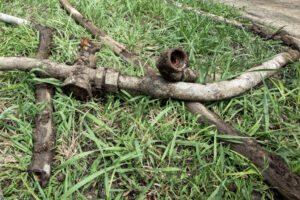
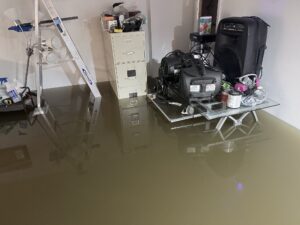
The SRFs are loan-based programs that support critical community drinking water, stormwater, and wastewater infrastructure needs. In Ohio, rural, suburban, and urban communities face many water challenges – from drinking water contaminated with agricultural fertilizers and lead, to inadequate and aging stormwater and wastewater systems that discharge into waterbodies and back up into homes, while failing to protect residents from flooding. The SRFs combine state and federal funds to offer low-interest loans and other preferred financing terms for projects to address these issues that might not otherwise be feasible due to cost. For communities with the greatest need or disadvantage, terms may include zero-interest loans and/or a portion of the award as principal forgiveness.
Over the past several decades, the blended federal-state SRF programs—one for Clean Water (stormwater and wastewater) and the other for Drinking Water—have provided billions in funding and financing for water infrastructure nationwide. Ohio EPA has leveraged federal and state contributions to the state‘s two SRFs to award nearly $20.5 billion in loans and $1.3 billion in principal forgiveness since 1989. In the most recent SRF program years, substantial additional federal funding has been working its way through these state-administered programs, due to the Infrastructure Investment and Jobs Act (IIJA), also known as the Bipartisan Infrastructure Law (“BIL”).
This federal law, enacted by Congress in 2021, supplemented regular federal SRF appropriations with an additional $43 billion. The law requires U.S. EPA to allocate this additional funding to states over a five-year period (2022–2026), while allowing state administrators of SRF programs several additional years beyond 2026 to award their IIJA/BIL funding to water utilities and other eligible applicants. In sum, Ohio has several more years during which the federal injection from IIJA/BIL will be available to communities for water infrastructure programs.
However, once this period ends, if Congress does not take further action to provide additional federal funding to the SRFs either through significantly increasing regular appropriations or another special funding injection as it did with IIJA/BIL, Ohio’s SRFs will face an acute and substantial drop-off in federal funding in the coming years. This drop-off will be felt most acutely through more limited availability of principal forgiveness in future program years because Ohio relies on this federal funding to award principal forgiveness. Other states, such as Wisconsin, are already seeking public input on how to plan for the anticipated drop-off in federal funding and, consequently, principal forgiveness.
Why is this dashboard an important step forward?
Transparency is essential for fostering public trust and assessing whether state SRF policies and funding decisions adequately serve all communities. Notably, each state manages its own SRF programs, resulting in differing priorities and rules for accessing financing and funding. In addition, applicants to the SRFs that have funding reserved for them in states’ annual cycles do not always complete the award process on the schedule submitted in their applications, and some ultimately do not finalize an award for a variety of reasons. As a result, it can be difficult for the public to understand which communities have and have not received awards at any given time.
For this reason, one of our priority asks of Ohio EPA has been the creation of a public-facing dashboard to increase transparency and access to information. A state-sponsored dashboard can house a significant amount of data, present it in various forms, and enable more real-time updates. This functionality supports a level of transparency and access not provided by more static annual program documents mandated by federal law and regulations or U.S. EPA’s federal SRF database. State databases like Ohio’s also can bridge information gaps created by infrequent updating and/or discontinuation of similar federal databases.
Several notable features of Ohio’s new database include:
- Unlike US EPA’s SRF database, which is updated annually, Ohio EPA will update its SRF dashboard monthly.
- The information can be displayed in map or table format (with an option to download live spreadsheets) and includes data dating back to 1989 through the current year.
- The information provided allows the public to examine specific details of SRF awards, including recipients, project types, loan amounts, interest rates, and principal forgiveness awards.
In short, this new tool will support more timely analyses and ongoing advocacy efforts to improve and refine Ohio’s SRF programs.
Transparency through state online databases like Ohio’s strengthens public understanding of where and how money flows and highlights examples of successful SRF requests for community water systems to emulate. By making SRF funding decisions and project data more accessible, Ohio’s dashboard serves as an example for transparent reporting that supports equitable investment, informed advocacy, and ongoing program improvement.
We will continue supporting efforts in other Great Lakes states to adopt similar transparency measures and improve our region’s public access to critical information about these important programs.
If you want to dig deeper into state SRF programs like Ohio’s, visit https://srfadvocatesforum.org/who-we-are/.